

Session 01
Auth refactor · Rate limiting · Unit tests passing
completedYour team has AI tools. They don't have process. TheEngOrg gives every project a complete engineering organization — planning, building, reviewing, shipping — so your engineers focus on the problems that matter.
24 agents • intake to merge • zero micromanagement
Other tools give you a chatbot that writes code. TheEngOrg gives you a CEO who challenges your priorities, a CTO who names the tradeoffs, a QA engineer who writes misuse cases first, and a Sage who won't let any of them skip a step.
The gap
Leadership says "here's Copilot, go 10x." But raw tools without structure produce inconsistent results. Code gets written without specs. Reviews skip edge cases. Features ship without tests. Not because your engineers are bad — because there's no system making sure the right work happens in the right order.
The gap isn't talent or tooling. It's the process between "ticket created" and "code merged." That's what TheEngOrg fills.
24 agents
Every project gets exactly the roles it needs — no more, no less.
| Tier | Agents |
|---|---|
| Apex | The Sage |
| C-Suite | CEO, CTO, CMO/COO, CFO |
| Director | Engineering Manager, Tech Lead, Product Owner, QA Lead |
| IC/Specialist | Dev, Designer, Security, DevOps, API Design, Data, +6 more |
Intelligent routing
A bug fix doesn't need the whole org. A product launch does. TheEngOrg reads the work and assembles exactly the right people — keeping costs low and quality high.
Task type
Sample task
Launch v2.0. New pricing, new infra, new market positioning.

Quality assurance
The same pipeline. One difference: quality checks at every step.
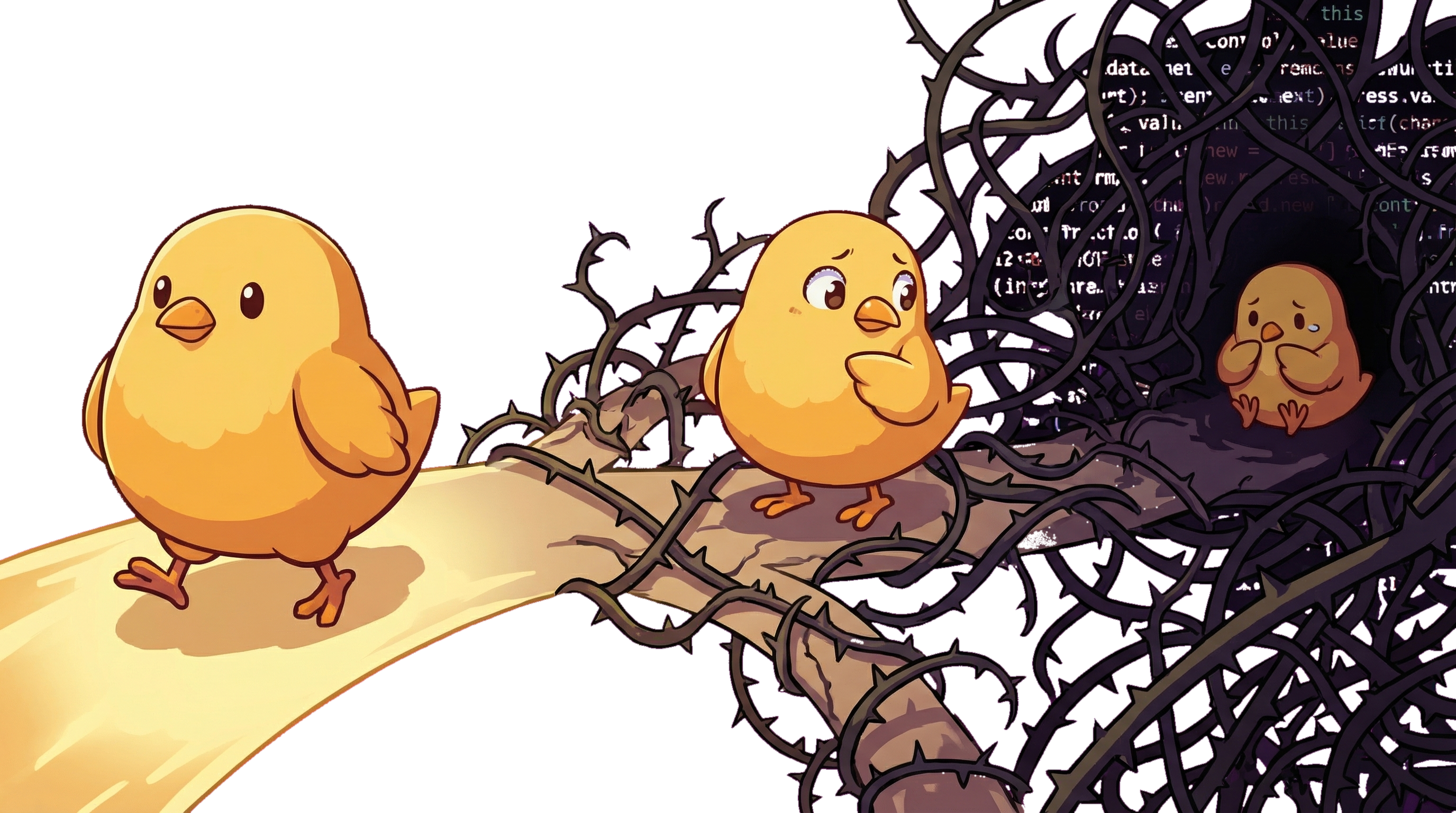

Without the Sage: a bird starts on a clear path but gets increasingly lost in dark, tangled code thorns. With the Sage: the capybara guide walks alongside the bird, lighting the path with its orb while agent capybaras serve as checkpoints.
The Supervisor watches your pipeline and raises alerts when something looks wrong. Good for catching problems. Not for stopping them before they start.
Alerts after issues begin.The Sage compares every deliverable against its spec before any downstream work touches it. Scope creep at line one gets caught at line one — not after three teams have already built on top of it.
Problems stopped before they spread.Catching a scope issue early takes minutes. Missing it — and watching three teams build on the wrong foundation — costs days of rework.
Without the Sage: 1.5 out of 3 issues detected. With the Sage: all three. The half-catch is the dangerous one — you know something's wrong, but too late.
Unorchestrated pipeline: one security incident (secrets displayed in the UI). The Sage caught the upstream scope creep that caused it — before the next team built against the wrong API.
Clean pipeline, right team, no wasted cycles. The savings compound with every task. So does the quality.
A developer adds three improvements "while they're in there" — a PATCH endpoint, HMAC signature verification, rate limiting. All tests pass. They submit for review.
Without the Sage, three things happen. QA has to retroactively spec features they never planned for. A downstream dashboard team reads the implementation (not the spec) and builds a UI that displays webhook secrets in plaintext. Then someone notices.
With the Sage, one thing happens. It compares the deliverable against the approved spec, names the three additions specifically, and sends the developer back to implement exactly what was tested. The cascade never starts.
[SAGE] "All tests pass" — yes, because QA never wrote tests for these features. Untested code passing is not a quality signal. It is the absence of a quality signal.
Five capabilities
None of these exist in the base pipeline.
Every initiative starts with the Sage reading the scope. What domains are involved? What roles are actually needed? It maps the problem space before spawning anyone, which means no wasted agent turns and no coverage gaps. Pure engineering gets a CTO. A full product launch gets all four.
The Sage doesn't trust "generally" or "typically." It maps the problem space first, runs general research, then evaluates coverage against that map. Gaps get specialist agents with specific questions — not open-ended prompts. Research quality compounds across sessions.
Most pipelines check quality at milestones. The Sage checks constantly. The moment work is delivered, it's compared against the approved spec. Scope creep, skipped tests, shortcut reasoning — caught before anything downstream builds on top of it.
Large initiatives don't fit in one context window — they shouldn't try to. The Sage breaks work into dependency-ordered sessions, writes full YAML snapshots at the end of each one, and generates cold-start primers so the next session picks up exactly where the last left off. No reconstruction. No lost decisions.
session: 3
scope: WS-B event dispatch engine
completed:
  - Retry logic with exponential backoff
  - Dead letter queue implementation
decisions:
  - 5s connect / 10s response timeout (TLS vs application distinction)
deferred:
  - Dashboard integration (WS-C, next session)
next_session:
  - WS-C read-only dashboard against approved API contract
Some behaviors aren't triggered by events. They're just always on. The Sage challenges dropped findings. It questions direct edits that bypass the build pipeline. It verifies that code reviews covered more than the golden path. It notices when scope is creeping mid-session and names it. You don't configure these. They're part of what the Sage is.
Session management
The Sage scopes each session, writes context bridges, and picks up exactly where you left off.
Session 01
Auth refactor · Rate limiting · Unit tests passing
completedSession 02
Onboarding flow · Feature flags · QA review
completedSession 03
v2 launch prep · Pricing update · Deploy
in progressEach session has a defined scope. The Sage writes what was decided, what was deferred, and what comes next — so the next session starts sharp.
The economics
Your team handles the hard problems. TheEngOrg handles the process — triage, planning, reviews, gates — so your engineers have more time, more confidence, and more impact.
"We need better planning... a better way of doing maintenance work, refactoring, updates. I used to be a craftsman — now I feel like a factory manager."— Michael Parker, VP of Engineering at TurinTech (Stack Overflow, 2026)
The engine
Constraint-Driven Agentic Development classifies every task at intake and routes it through a deterministic execution path. No human judgment needed to determine the review path. No process steps that depend on someone remembering.
Simple changes are classified at intake, implemented by a single agent, and verified by an automated gate — tests, coverage, scope limits. No leadership review. No merge ceremony.
1 spawn · 60%+ of all workComplex or risky changes get executive review, QA test specs, dev implementation, staff engineer review, and leadership approval — each enforced by structural gates.
5-6 spawns · Full governance pathWhether you're leading an engineering team, building open source, or evaluating the opportunity — there's a path for you.
Tell us about your team and what you're looking for. We'll get back to you within a day.
Try the open-source framework. 24 agents, 19 skills, project-local memory. Free forever.
Get started on GitHubSee the market opportunity and our thesis on AI-native engineering process.
Shipping fast
We ship multiple times a day. Here's what's recent.